
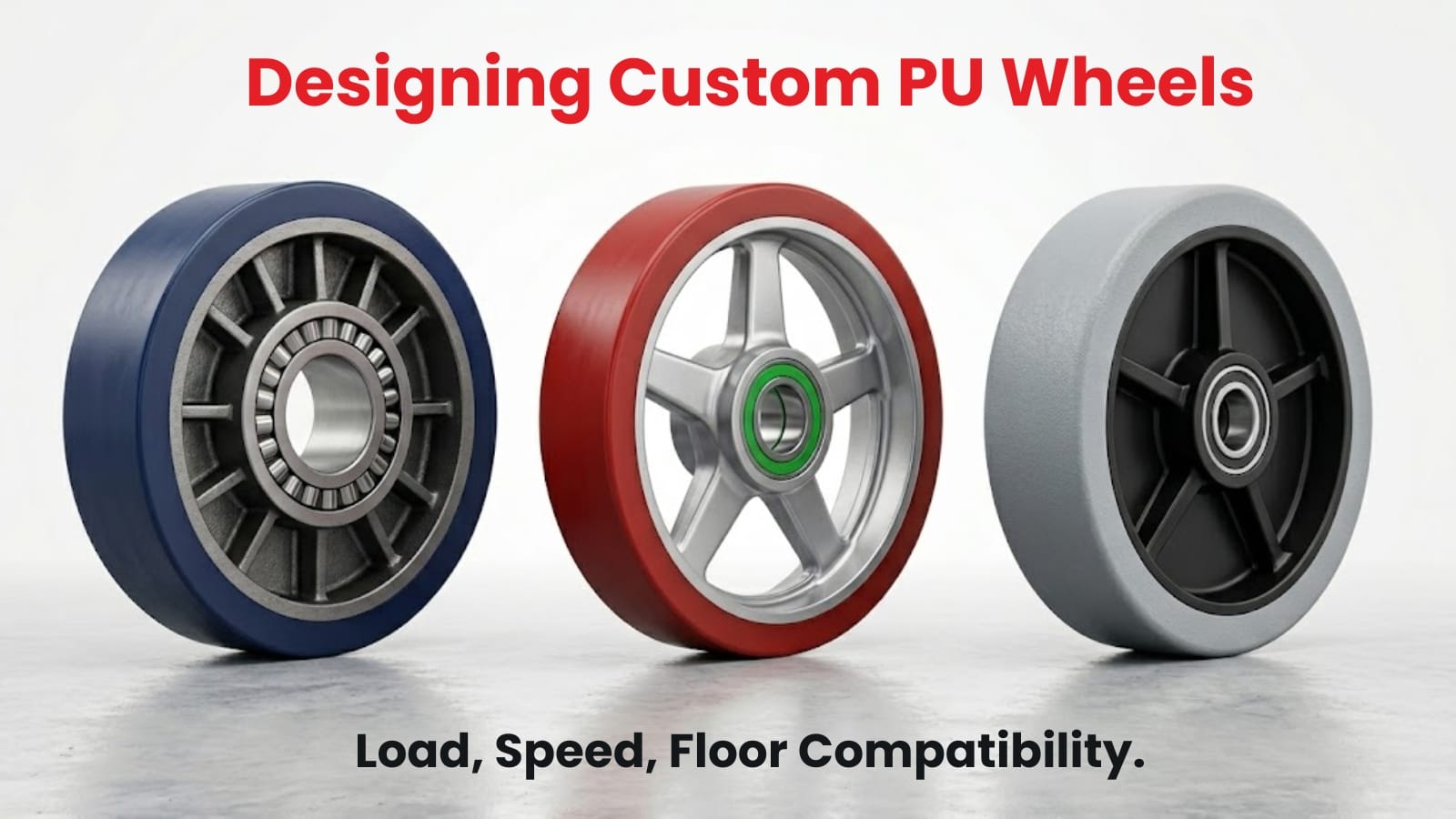
In modern industrial applications, wheels play a critical role in ensuring smooth movement, operational efficiency, and workplace safety. Whether used in material handling equipment, trolleys, forklifts, conveyors, or heavy industrial machinery, the right wheel design directly impacts productivity and maintenance costs.
Among the various wheel materials available today, polyurethane (PU) wheels have become the preferred choice for industries because of their exceptional durability, wear resistance, load-bearing strength, and floor protection capabilities. However, selecting the right PU wheel is not simply about choosing a standard size. Factors like load capacity, operating speed, floor conditions, and environmental exposure must all be considered when designing custom PU wheels.
In this blog, we will explore the key factors involved in designing high-performance polyurethane wheels and how customized PU solutions can improve industrial operations.
Polyurethane wheels combine the flexibility of rubber with the strength of metal, making them ideal for heavy-duty industrial applications. Compared to traditional rubber wheels, PU wheels offer:
These properties make polyurethane wheels highly suitable for demanding industries such as manufacturing, logistics, mining, warehousing, steel plants, and material handling systems.
As one of the leading manufacturers of industrial polyurethane products, Vam Poly Plast Pvt Ltd specializes in customized PU wheel solutions engineered for various industrial environments.
Load capacity is one of the most important factors when designing polyurethane wheels. Choosing wheels without considering the actual operational load can lead to premature wear, wheel deformation, and equipment failure.
Key Factors Affecting Load Capacity
1. Wheel Diameter
Larger wheel diameters distribute weight more efficiently and reduce rolling resistance. Heavy-duty applications often require larger PU wheels to support higher loads.
2. Polyurethane Hardness
PU wheels are available in different hardness levels, measured on the Shore hardness scale. Harder wheels generally support heavier loads, while softer wheels provide better floor grip and shock absorption.
3. Core Material
For extreme industrial environments, steel and cast iron cores are commonly preferred for their strength and durability.
4. Load Distribution
Uneven load distribution increases stress on wheels and may reduce their service life. Proper wheel configuration ensures balanced weight handling and smoother movement.
Experienced PU Conveyor Components Manufacturers understand these engineering requirements and design wheels based on actual application conditions.
Operating speed significantly affects wheel temperature, wear rate, and overall performance. As speed increases, friction and heat generation also increase, which can impact polyurethane durability if not properly designed.
How Speed Affects PU Wheels
Designing Wheels for High-Speed Applications
Custom-designed Heavy Duty PU Conveyor Solutions ensure smooth operation even under continuous industrial usage.
One of the biggest advantages of polyurethane wheels is their ability to operate on different floor surfaces without causing excessive damage. However, wheel design must match the floor condition for maximum performance.
Common Industrial Floor Types
How Floor Conditions Impact Wheel Selection
Smooth Floors
Softer polyurethane wheels provide better traction and quieter movement on smooth surfaces.
Rough Floors
Harder polyurethane compounds improve wear resistance on rough or uneven floors.
Sensitive Floors
Non-marking PU wheels are ideal for industries where floor protection is important, such as warehouses, hospitals, and cleanroom environments.
As a trusted Industrial PU Conveyor Components Supplier, Vam Poly Plast manufactures customized polyurethane wheels suitable for diverse floor conditions and industrial applications.
Industrial environments expose wheels to heavy loads, abrasion, chemicals, oils, and moisture. Standard wheels often fail under such conditions, leading to frequent replacements and operational downtime.
Polyurethane offers excellent wear resistance, making it highly effective in harsh industrial environments.
Benefits of Wear Resistant PU Wheels
High-quality Wear Resistant PU Conveyor Components ensure reliable performance in demanding industries like mining, steel, cement, and material handling.
Every industrial application has unique operational requirements. Custom PU wheel design allows industries to achieve better performance and durability.
Common Customization Options Include:
Customized wheels improve operational efficiency while reducing long-term maintenance expenses.
As one of the established Polyurethane Conveyor Parts India manufacturers, Vam Poly Plast delivers durable polyurethane products tailored to industrial requirements.
Vam Poly Plast Pvt Ltd has built a strong reputation for manufacturing high-quality industrial polyurethane products for various sectors.
The company offers:
With advanced manufacturing capabilities and extensive industry experience, Vam Poly Plast delivers reliable polyurethane products designed for high performance and long-term durability.
Designing the right polyurethane wheel requires careful consideration of load capacity, operating speed, and floor compatibility. A properly engineered PU wheel not only improves operational efficiency but also reduces downtime, maintenance costs, and equipment wear.
Industries operating in demanding environments can benefit significantly from customized polyurethane wheel solutions designed specifically for their application needs. With excellent wear resistance, high load-bearing strength, and floor-friendly performance, polyurethane wheels continue to be one of the most reliable solutions for modern industrial operations.
For high-quality and customized PU wheel solutions, Vam Poly Plast Pvt Ltd remains a trusted partner for industries across India.

Established in 1988, Vam Poly Plast is one of the leading manufacturers of superior quality Polyurethane products. With our most outstanding engineering knowledge and expertise in Industrial applications, we offer our clients with customised line of infallible polyurethane products.